
Randomised clinical trial finds gamified rehab could be an effective alternative to standard care
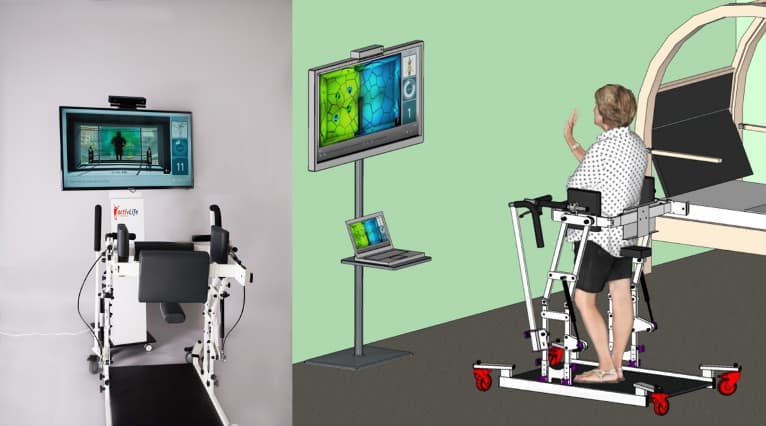
A recent randomised control trial has revealed that game-based rehabilitation equipment could be an effective alternative to standard care for older patients to regain their functional capacities.
Entitled ‘Gamified Physical Rehabilitation for Older Adults With Musculoskeletal Issues: Pilot Noninferiority Randomized Clinical Trial’, the study was published online on 6 March 2023 by JMIR Publications.
The study is set in the context of the global ageing population. As people are living longer, older people are more likely to experience functional decline and be hospitalised. This puts pressure on hospitals and often results in higher care costs.
Patients who are hospitalised for musculoskeletal disorders often need to participate in rehabilitation programmes before they can return home. Once they have been discharged, there is normally a critical period at home where patients should continue with rehabilitation to regain and maintain functionality and prevent rehospitalisation.
In these instances, at-home rehabilitation could include tasks like walking, climbing stairs, standing, bathing independently, and physical activity.
To assist in this area, the use of a gamified rehabilitation system in addition to or instead of standard physical rehabilitation will have several potential advantages for healthcare systems, healthcare professionals, and patients, such as lower hospital costs, shorter hospital stays, and better access to care, the study underlines.
The objective of the trial was to compare the effectiveness of a gamified rehabilitation device with the standard of care to help older adult patients regain their functional capacities and maintain them three weeks post-discharge.
The study took place at two different sites in Switzerland: Loëx Hospital, a 104-bed geriatric post-acute rehabilitation hospital, and Joli-Mont, a 60-bed geriatric rehabilitation clinic.
Patients aged 65 and above hospitalised in one of the two study sites with musculoskeletal issues (pelvic or lower limb fractures, hip prostheses, falls, and low back pain), able to stand upright, and capable of understanding the instructions were eligible to participate in the study. Being able to interact with the equipment without any sensory, physical, or mental limitations was necessary. Patients considered too weak to interact with the device or planning to go to a nursing home were excluded. Due to a limitation associated with the device’s size, patients with obesity were not eligible.
A total of 57 patients took part in the study. 35 patients were randomly assigned to the intervention group using the gamified rehabilitation equipment, and 22 patients were randomly assigned to the control group receiving usual standard care. Due to dropout, only 41 patients were included in the postintervention analysis.
The rehabilitation technology used within the study is called ActivLife, which is a multifunctional system with different functionalities such as physical activation, rehabilitation, mobility, bed assistance, and mental stimulation. It is coupled with a serious game platform called Vast.Rehab, which allows the patients to complete their exercises (lower limbs, upper limbs, or both) while playing games.
In addition to the game components, ActivLife is composed of an efficient trunk stabilisation that reassures the patients while engaging in different movements such as “cleaning the window,” “guiding an ambulance,” or “flying a dragon”.
The games and instructions are displayed on a screen in front of the patient, who is secured in the ActivLife mechanical platform. The screen has a Kinect sensor that allows the software to determine if the patient is doing the exercise correctly. The software also allows the physiotherapist to programme and schedule a specific treatment (a series of games) for each patient. Based on the patient’s ability and progress, the physiotherapist can easily adjust the type of movement to control the game as well as the level of difficulty (by defining the required range of motion for each movement).
Stepwatch is a small and light tri-axial accelerometer that can measure the activity of the patient in terms of the number of steps, activity, cadence, and velocity. The wearable does not display any information and can be worn on the ankle using a Velcro strap. The Stepwatch can capture small changes in step rate, thus it can be used to assess changes in physical activity in individuals who walk slowly or use a walking aid such as a rollator.
For three weeks, both intervention and control groups participated in 30-minute training sessions five times a week. The intervention group used ActivLife three times a week during these sessions, while the control group had all their sessions consist of standard physical therapy sessions.
The study assessed patients in three areas: balance tests, gait speed tests, and chair stand tests.
During their hospital stay, the rehabilitation was performed under the supervision of two physiotherapists (one at each site). The games played by the patients in the intervention group were selected and defined by the physiotherapist based on the patient’s treatment needs and abilities. The patients could then play a series of games defined by the physiotherapist during their hospital stay.
After discharge (week three), the patients were assessed at home by the physiotherapist at week three. Depending on their state at discharge, some of the patients were recommended to continue physiotherapy at home. All participants in both groups wore the Stepwatch sensor during the six weeks.
At the end of the study, “no significant differences” were found between the control and intervention groups when looking at functional improvements among the participants’ musculoskeletal issues. These results show the potential of the serious game-based intervention to be as effective as the standard rehabilitation at the hospital.