
Smartwatches could detect Parkinson’s up to seven years before symptoms appear
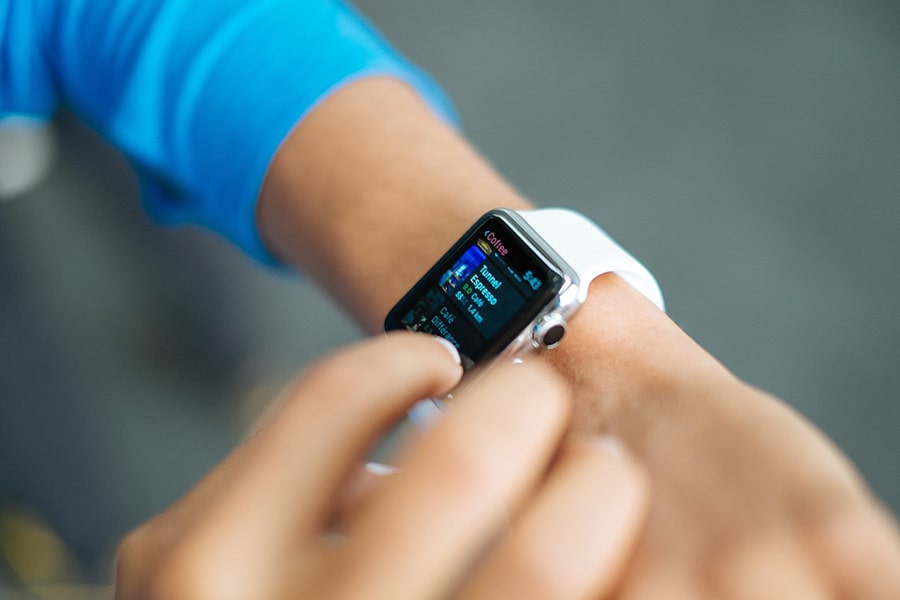
Wearables could identify Parkinson’s disease up to seven years before hallmark symptoms appear and a clinical diagnosis can be made, according to new research from the UK Dementia Research Institute (UK DRI).
In the study, scientists analysed data collected by smartwatches over a seven-day period measuring participants’ speed of movement. They found that they could accurately predict, using AI, those who would go on to later develop Parkinson’s disease.
Researchers say this could be used as a new screening tool for Parkinson’s disease, which would enable detection of the disorder at a much earlier stage than current methods allow. The study was led by scientists at the UK DRI and Neuroscience and Mental Health Innovation Institute (NMHII) at Cardiff University.
The study leader, Dr Cynthia Sandor, Emerging Leader at the UK DRI at Cardiff, commented: “Smartwatch data is easily accessible and low-cost. As of 2020, around 30 percent of the UK population wear smartwatches. By using this type of data, we would potentially be able to identify individuals in the very early stages of Parkinson’s disease within the general population.
“We have shown here that a single week of data captured can predict events up to seven years in the future. With these results we could develop a valuable screening tool to aid in the early detection of Parkinson’s. This has implications both for research, in improving recruitment into clinical trials, and in clinical practice, in allowing patients to access treatments at an earlier stage, in future when such treatments become available.”
UK DRI underlines the importance of being able to detect Parkinson’s disease. Currently, by the time the hallmark symptoms of Parkinson’s begin to show and a diagnosis is made, many cells in the brain will have already died.
It hopes that this new smartwatch research will cheaply, reliably, and easily identify symptoms so that an intervention can be made before the disease causes extensive damage to the brain.
The researchers analysed data collected from 103,712 UK Biobank participants who wore a medical-grade smartwatch for a seven-day period in 2013-2016. The devices measured average acceleration continuously over the week.
They compared data from a subset of participants who had already been diagnosed with Parkinson’s disease to another group who received a diagnosis up to seven years after the smartwatch data was collected. These groups were also compared to age- and sex-matched healthy people.
The researchers showed that, using AI, it is possible to identify participants who would later go on to develop Parkinson’s disease, from their smartwatch data. Not only could these participants be distinguished from healthy controls in the study, but the researchers then extended this to show that the AI could be used to identify individuals who would later develop Parkinson’s in the general population. They found that this was more accurate than any other risk factor or other recognised early sign of the disease in predicting whether someone would develop Parkinson’s disease. The model was also able to predict time to diagnosis.
A limitation to the study is the lack of replication using another data source, as there are currently no other comparable data sets that would allow for similar analysis, UK DRI points out. However, it performed an extensive evaluation to mitigate any biases.
Dr Kathryn Peall, Clinical Senior Lecturer in the NMHII at Cardiff, added: “For most people with Parkinson’s disease, by the time they start to experience symptoms, many of the affected brain cells have already been lost. This means that diagnosing the condition early is challenging.
“Though our findings here are not intended to replace existing methods of diagnosis, smartwatch data could provide a useful screening tool to aid in the early detection of the disease. This means that as new treatments hopefully begin to emerge, people will be able to access them before the disease causes extensive damage to the brain.”
The study has been published in the journal Nature Medicine.
Last year, the NHS gave hundreds of patients with Parkinson’s disease “life-changing” smartwatches to allow doctors to remotely assess their condition. Find out more about this innovative trial here.